Feeds:
Posts
Comments

The following is an excerpt from the new book: The Community Life of God

You can order this new book by clicking here

“Do you not believe that I am in the Father and the Father is in Me? The words that I say to you I do not speak from Myself, but the Father who abides in Me does His works.” John 14:10

Because of our fallen minds, we have a very twisted view of personhood. Our definition of a “person” is not based upon the proper foundation. The proper foundation is God Himself. Obviously, all personhood originated in and with the living God. Before there was anything, there was God. Before there were any other persons, there was God. Therefore, we need to look into God Himself to discover the foundation and essence of all personhood.

The Uniqueness of the Individual

First of all, we need to see that within this corporate God of ours there are three distinct and unique Persons. The Father, the Son, and the Holy Spirit each have their own distinctive personalities. I am not speaking here of functions or roles, but rather the unique personalities that make them who they are. Each one has His own peculiar characteristics, the personality “traits,” if you will, that make Him unique.

Just because they are all one, does not mean they are the same. Oneness does not mean sameness. In fact, oneness presumes diversity. This means that within the one God, there are three different and distinct personalities who all think, live and act as one entity. This is more than just a team. This is a community.

“It reflects the unity in diversity inherent in the divine Trinity of persons that in an analogous way should characterize the life of the church in its local, regional, international, and universal dimension. This fellowship does not aim to overcome all diversity, but rather to embrace it in a dynamic, relational, and growing bond of love and understanding.”

Kevin Giles
What on Earth is the Church?
InterVarsity Press, 1995, p. 202

But my point here is that in order to have diversity, you must have distinction. The Persons within the Godhead all have their own distinctions that make them unique. The expression of this can be seen in the creation.

I love to watch people. Sometimes, when my wife and I go to the shopping mall, we just sit there and watch the people go by. It never ceases to amaze me how each individual person is different. And I’m just speaking of their appearances. Each person has his or her own unique look. No two people look exactly identical. It is so mysterious and yet so wonderful that our God could have so much variety within Himself to be able to express it in such a creation.

Then, when you think about each person’s own unique personality traits and mannerisms it even gets more amazing. There are literally billions of people on this planet right now and yet each one is unique. And that’s just those people who are alive right now! What about the billions who have gone before us and those who will come after? Think about all of the people who have ever been born in the human race since the beginning. Each and every one of those is completely unique. If that doesn’t give you cause to praise your Lord, I don’t know what will.

Your God is into the uniqueness of the person. Your God is into the sanctity of the individual. Your God, obviously, loves diversity and variety. He is not a stoic, boring God. He loves colors, He loves variety, and He loves life! He created you as a unique individual. He created you to be a unique expression of Him. You can bring out and express a side of Him that no one else can express. The Father came into His Son and marked off a particular portion of the life of His Son and He wrote your name on it! Yes, He chose you, in all your uniqueness, to be one of His “holy ones” to be loved by Him (Eph. 1:4). You have been called, chosen, set apart, sanctified, and then placed into the Body of Christ to fulfill a great destiny. That destiny is to be part of His fullness (Eph. 1:23). This fullness is His Body, the expression of Him who fills all in all. And only you can fulfill your specific destiny in your own unique way. You are one of the many “flavors” of Christ. The unique flavor that His life in you produces cannot be reproduced in anyone else.

So we can see that the uniqueness of the individual is one of the requirements of personhood. A “person” is one who is different and unique from others. However, this is only half of the story. Without this next half, personhood would never exist.

Personhood is Defined by Relationship

As I have said many times, within the one God there are three Persons. These three coexist and coinhere together. Their coexistence means that the three live and exist at the same time. All three exist at the same time. The Father does not disappear to then become the Son, and then the Son disappears to become the Spirit. They all exist all of the time.

Coinherence means that they each live inside of one another. The Father is inside of the Son. The Son is inside of the Father. The Spirit is inside of the Son. They all three live inside of one another. Because they coinhere, they are one. They are in one another. (See John 14-17.)

They are also self-dedicated to one another. This means that each one is totally dependent upon the others. They are much more than a co-op.

They not only cooperate with one another, they are completely dependent upon one another. No one Person acts alone. Whenever one Person is engaged in an activity, they are all engaged together. We can see this in the earthly life of the Lord Jesus.

He did all things in the name of the Father (John 17:6). He spoke the words of the Father and did the works of the Father (John 8: 28, 29). He never acted alone. He always moved together in His community. He also told the Pharisees that He cast out demons by the Spirit. Here again, we see the members of the Godhead working together. When Jesus was baptized by John we see the whole Trinity involved. The Son was baptized, the Spirit descended as a dove, and the Father spoke from heaven.

This God that we have is a Three-in-one God. Yet all three of these Persons obtain their identities from the community. They are not separated, independent individuals who all do their own individual things. They are one heart, one mind, one soul, and always move and act together as one. Each one receives His “personhood” from His relationship to the others. Without the relationship, there would be no persons. This shows us some very important aspects of personhood in general. Remember, all personhood originates from within this Triune God.

Personhood is Rooted in Oneness

First of all, we can clearly see that personhood has a context. There is no such thing as a person who is in a vacuum. Personhood has its own environment. It must be rooted into the firm soil of community. It must be planted in the solid ground of oneness. It is only in the sphere of corporate life that true personality emerges. Without relationship, there can be no true personhood. A person without community is like a fish out of water.

“Participation in the dynamic of Trinitarian love, however, is not ones merely as individuals in isolation. Rather, it is a privilege we share with all other believers. The Spirit’s activity within us makes us co-participants in the relationship enjoyed between the Father and the Son. In mediating this relationship to us, the Spirit draws us together into one people. Only in our Spirit-produced corporateness do we truly reflect to all creation the grand dynamic that lies at the heart of the Triune God.”

Stanley J. Grenz
Created for Community
Baker Books House, 1998, p. 216

There are many colors of light, as we can see in a rainbow. But all of these colors exist within the one color of white. The color of white contains all of the other colors. We could compare white to community. All of the individual colors radiate from within the white light. In other words, all the uniqueness of the varying colors emanate from within the environment of community. Without the white light, there would be nothing to contain the colors. So we can see in this way that community is the “container” for personhood.

The one God is the container for the Father, Son, and Holy Spirit. The three Persons live in and are (together) God. Their relationship or their community is the environment in which they live. They live within a context. They live in and as a community. The main activity of this community is fellowship. Fellowship is the act of sharing, giving, relating, communicating, and experiencing their common life. This is the sphere in which they live. This is what defines them as individual Persons.

Identity Only Found in Community

People in this world are always searching for their identity. “Who am I?” is one of the most basic questions that mankind has ever asked. There is no doubt that as a race, Adam has lost his identity. We really do not have any idea who we are. So the search is never ending for our own identity. I am speaking of the identity of the individual person. How am I unique? How am I special? How do I stand out from the crowd? You, dear reader, may have asked yourself these same questions. But let me tell you that you will never have the answers to these types of questions outside of community. Your identity can only be discovered in the environment of relationship.

You are a unique individual. However, there is only one part of you that can know the real you. You cannot discover who you are with your mind or emotions. You can only discover the real you in your spirit. Paul told us this in I Cor. 2:11. Only the spirit of a man truly knows that man. Why is this? It’s because the spirit is the part of us that is connected with God. God’s Spirit lives inside of our spirit. Therefore, our human spirit is the organ of community. It is the way we communicate with the Triune God.

Personhood and identity can only be defined by relating to others. You will never truly “find yourself” until you are living in the community life of God. Then, and only then, will your true colors come out. What I mean by “true colors” are those aspects of Christ that have been placed into you to make you special. These are the riches of Christ. You are special because God has deposited some unique aspects of Himself within you. But those “colors” can only be displayed in the context of the community life. It is only as you live and relate to others in the Body of Christ that your own uniqueness can come forth. This is because of God’s purpose and plan. He wants to be expressed through a corporate vessel. This vessel is the fullness of Christ (Eph. 1:22, 23). Each individual person within this vessel will express or display a unique aspect of the living God. Together they all make up this new communal man. Together, as one, they express and enlarge the fullness of Christ!

My wife, Mary, and I just returned from a weekend conference in Las Vegas, Nevada. Alan Levine, Frank Viola, Gary Welter, and myself spoke at this event and there were around 160 believers there. I must say that I had a great time. There were many physical problems and struggles throughout the event, but God was triumphant in glorifying His wonderful Son!

One thing that stood out to me at this particular event was the great diversity among the people there. There were believers from all walks of life, backgrounds, and places along this journey to the heart of God. But they all seemed very hungry to know Him better! The ones that I talked to were all very desperate to stop playing the game and start getting down to the reality of knowing Him and being part of His house. The message of the vision of God’s eternal purpose seemed to impact them deeply. The realization that God wants something for Himself touched many.

As we travel around this country (and others) we are seeing this kind of hunger and desperation more and more. God is truly doing something worldwide to bring His people back to Him and His eternal purpose. This is truly amazing and very exciting!

Let no one therefore judge you in eating and in drinking or in respect of a feast or of a new moon or of the Sabbath, which are a shadow of the things to come, but the body is of Christ.” Col. 2:16, 17

And He is before all things . . .” Col. 1:17a

The Colossian believers had abandoned their pursuit of Christ to chase shadows. They had heard the true gospel from Epaphras (Col. 1:5 – 7). This gospel was the same gospel preached by Paul of Tarsus. This gospel was not about a thing. This gospel (or good news) was not about an ‘it.’ This gospel was not about anything. This gospel is a Person: the very Person of the Lord Jesus Christ! Paul said that he preached this Person (I Cor. 1:23; I Cor. 2:2; Gal. 1:15 – 16; Phil. 1:18). He preached this Person as the good news to mankind.

But the Colossians left the one true gospel for other things. These “things” were only shadows of the reality, that is, Christ Himself. They got into matters of the Jewish law, holy days, the Sabbath, and so on. And these things or shadows became their new religion.

The Religion of Shadows

Life can never be found in things but only in a Person (John 5:39, 40). And it’s a very sad fact that most Christians still have not discovered this truth.

We have built a religion based upon the foundation of shadows. Pretty flimsy I would say! We have built a religious system based upon teachings, methods, and programs. All of these are ‘things’ and ‘its’ and not the reality of the person of the Lord Jesus Christ. When I say “we,” I am referring to most believers down through the centuries who have (unknowingly) built the religion of Christianity. Webster defines Christianity as “the religion of Christians, or the system of doctrines and precepts taught by Christ; conformity to the laws and precepts of the Christian religion.”

Sadly, most Christians today would agree with that definition. And so would I. That is the Christian religion. That is Christianity. So under this definition and description I must declare to you that I have once and for all time rejected Christianity! But Milt, you may be saying, have you rejected the doctrines and precepts taught by Christ? No I have not. But I have rejected the idea that the teachings of Christ can be separated from the Person of Christ. The teachings or doctrines are there to point us to the Person. The teachings within themselves are not the goal. The Person is the goal!

So we have created this system called the Christian religion or Christianity and it has become just another “thing.” Jesus never started the Christian religion. He never started any religion. He only pointed people to the only Way to the Father. And then He told us that He is the Way. The problem with religions is that they all point to a teaching, a concept, a philosophy, a method, or a program to help you reach spirituality or your acceptance with God. But Jesus only pointed to a Person.

The All in All

Paul told the Colossians that all the fullness of God was found in only one place. That place is inside of the Lord Jesus Christ (Col. 1:19). He is everything that everyone is looking for. The letter to the Colossians points the believers to this glorious and awesome Person.

This wonderful Person is:

* The allotted portion of the saints
* The Image of the invisible God
* The Firstborn of all creation
* The One in whom all things were created
* Our redemption
* The One in whom, through whom, for whom all things were created
* Before all things
* The One who holds all things together
* The Head of the Body, the church
* The Beginning of the New Creation
* The Firstborn of the dead
* The One who must have first place in all things
* The One in whom all the fullness dwells
* The One who reconciles all things to Himself
* The Word of God
* The Mystery hidden from the ages
* The Hope of glory
* The One in whom are hidden all treasures of wisdom and knowledge
* The Soil we are rooted in
* The Substance of the shadows
* Our Life!

This glorious Christ is so much bigger than any mere religion! No religion can contain Him. No doctrinal system can define or explain Him. No set of things or ‘its’ can ever confine this unlimited Christ. Even your thoughts and ideas about Him can never restrain this all sufficient Person. The confines of man-made religion (including Christianity) can never harness the Christ who is before all things. No thing can contain this vast Christ, and, anything less than Him will never satisfy the human heart.

Yet we continue to settle for lesser things. We continue to settle for things about Him instead of just Him. We continue to live in the shadows instead of the substance. I don’t know about you, but I am tired of living in the shadows. I want to live in reality. I want to grab hold of the substance of this Person. I desperately want to live this Christ who is the All in all!

Culture or Christ?

“Peter began to say to Him, ‘Behold, we have left all and followed You.’ Jesus said, ‘Truly I say to you, there is no one who has left house or brothers or sisters or mother or father or children or fields for My sake and for the Gospel’s sake, but that he shall receive a hundred times as much now at this time, houses and brothers and sisters and mothers and children and fields, with persecutions, and in the coming age, eternal life.’”   Mark 10:28 – 30

In this series of “or Christ” articles I am making an attempt at exposing some of the modern day hindrances that we face in fulfilling the true mission of God, which is God’s eternal purpose (Eph. 1 & 3). As I have said elsewhere, this eternal purpose is centered in Jesus Christ himself. It is that all things would be summed up (or headed up) in Christ (Eph. 1:9 – 12). It is that he would have the preeminence (first place) in all things (Col. 1:18). And that he would fill all things with himself (Eph. 4:10).

This eternal purpose is fulfilled by God having a Body, a Bride, and a House (Eph. 1:22, 23). But it is the house that we will take a look at in this article.

The History of the House

God has always desired to have a place in which to dwell. Starting with Genesis in the Garden of Eden and ending with the book of Revelation and the New Jerusalem, it is easy to see God’s original intention to have a dwelling place. It is the sweeping story of the whole bible.

But along with that story has been the history of the hindrances to God getting his house. And one of the most powerful hindrances has been this matter of the culture of man. In fact, our culture, by and large, has had a more powerful influence over us than the gospel of Jesus Christ! That’s not something to be proud of, but it is a fact we must deal with. In order to do so, we need to understand the aspects of our culture that stand in the way of God having his dwelling place – a spiritual temple made of living stones (I Pet. 2:4, 5).

I believe that the best story in the scriptures to illustrate this “culture block” is found in the Babylonian captivity of the Jewish nation. This story is found in the books of Ezra, Esther, Nehemiah, Haggai, Zechariah, and Malachi. In case you aren’t familiar with the story, I will give you a brief background.

The Babylonian empire began way back in Genesis chapter eleven with the tower of Babel. There was a city built around the tower that existed in the country referred to as Shinar and later called the land of the Chaldeans. This is the city of man made religion. When Nebuchadnezzar became king of Babylon he attacked Jerusalem, tore down the temple, and took captive the Jews. Their captivity lasted 70 years in Babylon.

The Jews were marched 700 miles in the nude to Babylon. The Babylonians gave them new names and many of the children starved to death. Their women were raped and they all became slaves (Lamentations 5:12 – 21).

Comfortable in Babylon

Eventually, the Jews were given much freedom by their captors. They built their own houses, some started business, and many prospered. There was even considerable religious freedom. Since they no longer had the temple (the house of God), they created their own religious system called the synagogue.

The problem was that this synagogue system was only an artificial substitute for the true worship in the temple in Jerusalem. That was the only place God ordained the sacrifices.

In 538 BC, King Cyrus decreed that the Jews were now free to go back to Jerusalem and the Canaan land. But only 2% would go back! They were not willing to make the long trek (700 miles) back. They had become comfortable in Babylon. They had become Babylonians! And they were not willing to pay the price of returning to Jerusalem to rebuild God’s temple and God’s city.

The Three Pillars of Our Culture

Brothers and sisters, we have become comfortable in Babylon. God is calling his people everywhere to leave Babylon behind and to come and rebuild his true temple, the church. But many of us are stuck in the world’s system and the religious system. We have become too comfortable and are afraid to leave it all behind. There are three strongholds that hold together our western culture. They are as follows:

I) Individualism

Our isolated individualistic lifestyles are an outward expression of our individualistic minds. We only think about life individualistically. It’s only about me and my world. It’s all about my career, my family, my hobbies, my vacation, my investments, etc. We even call a device to listen to my music an I-pod! It’s very difficult for us to think any other way. That’s why it is such a miracle when a person begins the shift from thinking as me to thinking as we. Thinking corporately is not something that comes naturally to us. It requires a renewal of the mind (Rom. 12:1 – 5; Eph. 4:22 – 25; Col. 3:10, 11). But yet, it is absolutely necessary for a group of believers who want to “rebuild” the true house of God in their city. If we are going to live as the community of God, we must begin by thinking corporately. *

*See the author’s new book: “The Community Life of God

II) Money

Jesus had a lot to say about money and the pursuit of money and how it has a foothold on our lives (Matt. 6:24; Matt. 13:22; Mark 10:23; Matt. 21:12; Mark 6:8; Matt. 13:44; Matt. 6:32). Of course, it’s not money in itself, but rather the pursuit and love of money and everything that goes along with it. The problem is the hold that our consumeristic, materialistic society now has over us.

It’s absolutely incredible how much time and effort people will spend on the development of their careers. I live in a college town. About 50,000 young people come here every year to spend somewhere between 4 – 8 years and lots of their parents’ money to obtain a “marketable” career. Then there are all the night classes and vocational colleges and classes on the internet. Then, once we begin our careers, there are all of the late night hours to attempt to “climb” the corporate ladder.

But do we ever have enough stuff? Consumerism and materialism have taken over our lives and then to top it all of, we become slaves to debt. We esteem highly those who have the top level credit scores and thieves get more prison time than rapists! But our Lord said that you cannot serve two masters.

III) Family

Our Lord also had many things to say about the pull of family upon our lives (Matt. 10:35 – 37; Matt. 12:47 – 49; Matt. 19:5; Matt. 19:29; Luke 2:48, 49; Luke 12:53; Luke 14:26; John 19:26). I would say that in the western world Christians either neglect their families (because they are too busy pursuing mammon), or they idolize their families to the point of sacrificing the house (family) of God. When we place our family on a pedestal, then the pursuit of money is important to support the family. And this vicious cycle goes on and one.

Let’s face it folks, we have become Babylonians! We have become too comfortable and too busy with our own individual lives to be willing to make the long trek back to Jerusalem and join the rebuilding project. It is much too costly. Who would do such a thing?

Another Call to Rebuild

In the first century there was another call to rebuild. But this time it was to be the fulfillment of all of the shadows and types in the Old Testament. It was a call to build the true spiritual temple of the ecclesia. And I don’t think that it was a coincidence that it all happened in the same city of Jerusalem

Some had come from Galilee, and some had come from Mesopotamia, Judea, Cappadocia, Pontus, Asia, Egypt, Libya, Rome, Arabia, and many other places. Three thousand souls came to Christ that day of Pentecost and became part of this new thing on the earth called the church. But here is the most amazing thing to me. They all decided to leave everything to follow Him! What about their families, and their homes, and their jobs back home? They decided to stay in Jerusalem to build the true house of God.

I get emails and phone calls from believers all the time telling me that they want organic church life so badly, but there is no one else near them who has this same desire. I ask them if they have ever considered moving to another location. Then they tell me that it’s impossible. Christians will move because of a new job or to be closer to family, but to move for the house of God? Who would do that? Now don’t get me wrong, I understand that sometimes it is “impossible” to move because of circumstances. But that’s not my point. What God is after is our hearts. Are we willing to leave all to follow Him? Is His house that important to us?

When He said to seek first His kingdom (Matt 6:33), he really meant it! If we will allow Him to have the first place in everything (Col. 1:18), then we will want Him to have His house, His body, and His bride. And whatever perceived cost we may have to pay will pale in comparison to His glorious church!

Finding Organic Church

Finding Organic Church:  A Comprehensive Guide to Starting and Sustaining Authentic Christian Communities – by Frank Viola

In my opinion, this book has been long overdue.  For many years we have needed a book that draws both from the New Testament and current practical experience in the areas of church planting and sustaining.

Some very helpful books from the last century were Watchman Nee’s “The Church and the Work” and Roland Allen’s “Missionary Practices: St. Paul’s or Ours’?” which are both quoted in Viola’s new work.  However, what has been needed is a fresh look with current real-life experience in this arena.  We have needed someone to give modern day language within the context of what God is doing today.

Frank Viola does just that in “Finding Organic Church.”  He skillfully draws from both the New Testament and over twenty-one years of experience planting and working with New Testament style churches.  This piece of work will be invaluable to anyone who seeks to be involved in such churches and especially those who feel called by God to plant them.

The book is divided into four main parts:

  • Planting the Seed – Biblical Principles for Church Planting
  • Tilling the Ground – Answers to Questions
  • Cultivating the Soil – Practical Steps for Beginning
  • Pulling the Weeds – Health and Development

In all of these parts, Viola takes the biological (organic) view of the church, as given in the New Testament, and weaves that theme into all of his points. Then he dives into each one of those areas that include: The need for itinerant church planters, God’s way of planting churches, objections and questions, practical help for meetings and community life, the stages of an organic church, the seasons of an organic church, the diseases of an organic church, and how a worker cares for an organic church.

This book thoroughly covers the topics of finding, planting, and sustaining organic expressions of the church. I cannot recommend this book highly enough. It is truly a treasure that is chock full of resources and helpful to anyone involved in or interested in God’s way of planting and developing His church on the earth today.

You can order the book here:  Finding Organic Church

“But may it never be that I would boast, except in the cross of our Lord Jesus Christ, through which the world has been crucified to me, and I to the world” Gal. 6:14.

In Galatia, Paul had to deal with the problem of a different gospel. The Judaizers had come into the churches after he and Barnabas had left and brought in the gospel of legalism. His gospel was only Christ (Gal. 1:11,12; 15, 16). Yet the radically religious Jewish believers added something to the gospel. They tried to add something to Christ.

This was because some of the Galatians never really received the revelation of the cross. They didn’t realize that they had been crucified on that tree (Ro. 6:8; Col. 3:3). They actually thought that they still had their own lives! But a dead man doesn’t try to obey the Law of Moses. Why would he want to be circumcised? He’s dead to himself and only alive to God (Ro. 6:11).

For Paul, to live was Christ (Phil. 2:21), there was nothing else. Nothing else could be added because nothing else existed. Paul got it. Christ was his All. He lived to express Christ, preach Christ, and fulfill God’s eternal purpose in Christ. However, we find ourselves in a different situation today.

Our Modern Dilemma

It’s very clear from the scriptures that God has an eternal purpose (Eph. 1 & 3). This purpose is something that God had desired since before creation, hence the term eternal purpose. This purpose is centered in his beloved Son:

He made known to us the mystery of his will, according to his kind intention which he purposed in him with a view to an administration suitable to the fullness of the times, that is, the summing up of all things in Christ. Things in the heavens and things on the earth” Eph. 1:9, 10.

If you continue to read the letter to the Ephesians, this eternal purpose and will of God should become clear. God wants to increase or expand the sphere of his Son by having a Body for his expression, a Family for his community life, and a Bride with whom to share his love.

But herein lies our problem. We neither see nor understand this eternal passion within the heart of our God because we have been blinded by another gospel. This gospel is predominantly preached to us by our western culture and we have bought into it hook, line, and sinker. It colors everything we do and tints our spectacles to only see that which it wants us to see. This gospel has tightly fit us into its own mold and now everything we do is influenced by it.

We are not free to live by Christ, for Christ, and to Christ, nor are we free to live for God’s eternal purpose and passion. The tentacles of this monstrous mindset have their grips on our every thought and action. It’s like a wet blanket that is suffocating us from experiencing and displaying the glory of God in the face of Jesus Christ.

I am referring to the “gospel,” mindset, and culture of western consumerism.

We are a consumerist society and it pervades every area of our lives. Human need is god, and everything revolves around us getting our needs and desires fulfilled. The cry is, “Hey! I have needs you know. These needs must be met at whatever the cost!”

Needs by the Dozens

This becomes the most telling when we look at organized Christianity. Our “churches” are built upon fulfilling human needs. When Christians go “church shopping” what do they look for? A good preacher so I can be fed the Word. A good youth program so my kids can be taught. A good worship team so I can feel good during the service on Sunday morning. I want a closer location and a schedule of programs that fits my lifestyle. A good discipleship program so that I will mature in my walk with God.

All of these things we look for are no more than features and benefits. These are things that we feel we need. We have wants. We have needs. The church is here to fulfill those needs.

But then there are the needs of the world. What about the lost? They have a need for salvation. What about the poor? They have a need for food. And what about those in prison, or the sick, abused, exploited, neglected, abandoned, etc.? Isn’t the church here to take care of all of them?

We have Missed the Whole Point

We have been so “consumed” with human need. Could it be that we have totally missed the whole reason that the church of Jesus Christ even exists?

Our God has a Need!

Now I know that all you theologian types out there just reacted to that statement. However, I do realize that God is all sufficient within his own nature. But in a sense, he does have a need in relationship to his eternal purpose. He has an urgent desire and passion to accomplish something. And he needs certain things to take place to accomplish his goal.

My point is that we are so consumed with human need that we have forgotten that the church exists for one purpose and one purpose only. And that is to satisfy the longing within the heart of God! And that longing is that his dear Son would become the sum, the center, the head, the fulfillment, the expression, and the source of all things (Eph. 1); that he would fill all things with himself (Eph. 4:10); that this glorious Christ would have an expression that would freely express him in all his fullness (Eph. 1:22, 23); and that this expression would put all of his enemies to shame (Eph. 3: 8-12). As you can tell, this is a much higher calling than that of human need!

What about those who have left institutional Christianity? What about we who are involved in the house/simple/missional/emergent church movements? If we are brutally honest with ourselves, we will admit that much of what is happening among these movements is driven by the same exact engine as the institutional church – human need!

As I see it, many of our house churches are setup to meet the needs of those in the group and/or to meet the needs of those in the world. But I propose to you that this is the wrong premise. The only reason that any group calling itself a “church” should exist is to fulfill the eternal purpose of God in Christ. Everything else will flow out from that foundation.

If the eternal purpose of God in Christ is the vision and foundation for a church, then the life of Christ will flow out of that group to both meet the needs of the believers and the needs of the world around it.

If the foundations are destroyed, what can the righteous do?” Ps. 11:3

Brothers and sisters, may we all abandon foundations which are other than Christ and his glorious purpose and go for the gold of the knowledge of the glory of God in the face of Jesus Christ!

Read more articles at:  The Rebuilders

‘holistic’ – the whole is greater than the sum of its parts. The importance of the whole and the interdependence of its parts. The organic or functional relation between parts and whole.

The term “holistic” is mostly used in the field of alternative medicine. In this context it is usually defined as treating the whole person, not just the physical body.

In conventional medicine, it is usually only the specific body part that has the symptoms which is treated. The body itself is not viewed as only “part” of a bigger picture, the whole person. I believe that this is a mistake, but that is not the reason I have written this article. I believe that we, as believers, have made a similar mistake with our viewpoint and approach to the Body of Christ.

The Expression of the Whole Christ

And He subjected all things under His feet and gave Him to be Head over all things to the church, which is His Body, the fullness of the One who fills all in all. Eph. 1: 22, 23

The letter to the Ephesians probably shows us more than any other letter how the church is the Body of Christ. And that Body is to express the fullness of the Head, Jesus Christ.

Just think about your own physical body. What purpose does it serve? Does it not express in a physical, visible way the invisible person who lives within it? Your body communicates with the outside world. Your body expresses what you are thinking and feeling on the inside. When you speak you move your hands around to express your thoughts. I’m sure you have heard the term “body language.” It simply means that you can express your thoughts and feelings with your physical body.

It is the same way with the Body of Christ. We are to express (visibly) the invisible Person who lives within us. We do this individually and corporately. Each part expresses Christ but the fullness of Christ can only be expressed by the Body (Eph. 1:23). Individually we can only express a small part of this wonderful Person. But together, corporately, we can express the fullness or the whole Christ. And now this gets down to my point.

As the church, are we expressing the fullness of Christ or only a part? Could it be that we have taken and chosen certain aspects of His nature, character, and mission and only chosen to express those specific aspects? I strongly believe that we have done this. In fact, I hope to prove it to you in this article. I have termed this process as “selective expression.”

What is Selective Expression?

It is the process whereby we see, speak, teach, and consequentially express only a small part of Christ, and not the “Whole” Christ.

At the core of this problem is a very weak and limited revelation of Jesus Christ. We have a revelation of Him, but only in one small area. We have a small and limited Christ. We have only seen Him with limited vision. And that’s okay because we are all growing in our revelation and understanding of this unlimited Christ. Revelation is progressive and eternally growing and expanding.

However, the problem comes in when we stop the process along the way. We become satisfied with what we have already seen of Him and stop pursuing and pressing into Christ. Now, our experience of Christ settles and crystallizes like hardened concrete. This is when we form “filters” over our vision of Christ. We only see Him a certain way because we are looking through the “spectacles” of our past revelation and experience.

Here is an example. There was a time in my life when the Lord was revealing to me His heart for the lost. He showed me how much He loved them and wanted to reach them. This crystallized for me and became a filter over my eyes. Then, everything I saw in the scriptures was about evangelism. It didn’t matter where I went in the bible, all I saw was evangelism. I had put on the “spectacles” of evangelicalism. And now I was out to convert the non-believer and recruit the believer into becoming as evangelistic as me. Partial vision can sometimes be worse than total blindness!

The real problem came in when I went out to find others who had on the same spectacles as me. I only wanted to fellowship with Christians who were as evangelistic as me. Now we are talking corporate expression here. What I saw effected how I expressed. And now there was a group of us expressing together. The problem was that we were only expressing a very small part of Christ! He is much bigger than evangelism, miracles, healing, deliverance, feeding the poor, helping widows, spiritual gifts or spiritual warfare.

He is the All!

And His desire is to be expressed as such by His church.

First Things First – the Chicken or the Egg?

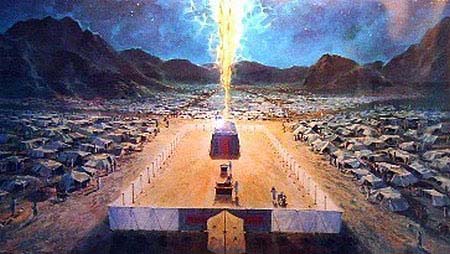
One of the first things that God had the children of Israel do after they left Egypt was to build the tabernacle (Ex. 25 – 30). When the new generation entered the Canaan land, the whole point was for God to have two things: a house (temple), and a city (Jerusalem). There was a certain piece of property that God had in mind for his house and the children of Israel would have to fight their way into the land to obtain it. The reason God wanted the land was to have a building site for his house and his city. The theme of the house and the city runs all throughout scripture. You can even see the raw materials for this building project in the garden (Gen. 2:12). Throughout all of scripture we see “the house” and “the city.” Here are just a few: Ezra 6:3; 2 Sam. 6:17; Ps. 132: 3-5; Heb. 4:16; Luke 9:58; Matt. 21:13; Matt. 16: 13-18; Heb. 11:10; Rev. 21 & 22.

The House and the City

It’s important that we realize that the city grows out of the house. The house must come first. Who ever heard of a city without a house? The city is the expansion of the house. But what is all of this figurative language about?

The House – a place for the Lord to rest his head.

The “house” is the dwelling place of God. It is the place where he can relax, where he can be himself. It is the place where he can freely express himself. Just like we design and decorate our homes to suit and express who we are, so does the Lord with his house. It’s all about the place of rest, comfort, and expression (Acts 7:44-50; Is. 66:1). The house is always the center of the city. In Old Covenant language, the temple is the center of Jerusalem. The temple was the focal point for all Jewish worship and culture. This is but a shadow or picture of the true house of God, the church (I Pet. 2_5; I pet. 4:17; I Tim. 3:15; I Cor. 3:9-16). And this house expresses who he is. This house is Jesus Christ in corporate form.

The City – all throughout scripture the city represents authority and power.

The establishment of a city always depicts the establishment of conquest and authority. God has always wanted a city. In Revelation 21 and 22 we see that he gets it. The New Jerusalem is the culmination of all of God’s purposes and dreams in one place. It’s a heavenly city that comes down to earth (Rev. 21:10). And God gets his desire fulfilled to dwell with and in man (Rev. 21:3). The Father and the Son are the Temple (Rev. 21:22). And this city is the wife of the Lamb (Rev. 21:9).

The city, since it represents God’s authority, also represents the kingdom of God. The throne of God is there and his people rule with him (Rev. 22:3-5). The city expresses who he is and what he does. The city is the fullness and expansion of the house. Christ is fully expressed through his church and this brings forth the kingdom. The kingdom is the expression of his mission to the world. It includes evangelism, feeding the poor, reaching the lost, healing of all sorts, deliverance — basically Isaiah 61:1, 2. The kingdom is the city set on a hill (Matt. 5:14-16).

The Present Dichotomy

I see that there has been a polarization happening among believers involving this issue of the house and the city. Many have created a dichotomy out of the church and the kingdom. There are those who say that the kingdom is what Jesus preached, so we should be into that. Then, there are others who say that Paul wrote mostly about the church, so we should be into that.

The truth is that this is not an either/or situation. The church and the kingdom are not diametrically opposed to one another. In fact, they are two sides of the same coin, so to speak. They are both aspects of the Lord Jesus Christ himself. The church brings the kingdom to earth because it is through the church that the nature, life, and works of God are displayed (Eph. 3:10, 11; Eph. 2:10).

Therefore, we will never see the kingdom come to this earth in any significant way until we see the church displaying the fullness of Christ. She is all about expressing her Lord. And the kingdom (his authority and works) are part of that expression.

We must remember that God has a divine order to things. The house comes before the city. Communal comes before missional. Relationship comes before good works. Identity comes before action. Being comes before doing. Who God is determines what he does. Jesus healed the sick because he is compassion. He raised the dead because he is resurrection. He fed the multitudes because he is the bread of life.

The Source and Origins of Church Life

Before anything else existed there was the fellowship and community of the Godhead (John 17). Before there was ministry, outreach, or mission, there was a divine community flowing with life. This is the model and foundation for all church life. If there is community life, and it is healthy, then the divine life of the Godhead will flow out to the world as well. Why? Because that is part of who God is. And the community of believers is all about expressing that life to one another and to the world. In other words, the community of the Godhead, in all of its fullness and glory, is to be expressed by the community of believers.

Sisters and brothers, we must begin there!

Frank Viola has written a much needed comprehensive look at God’s eternal purpose. There are other books out there that touch upon this subject but this is the most comprehensive work I have seen to date.

 Frank beautifully covers the topic by using a story-telling form in three parts. God’s eternal purpose is one of the least understood of all biblical doctrines, and yet it is the foundation for everything that He wants to do with mankind.

I strongly believe that this is one of the most important books of our time. Every believer needs to get their hands on a copy!

Because those whom He foreknew, He also predestinated to be conformed to the image of His Son, that He might be the Firstborn among many brothers.” Rom. 8:29


To Be Like Jesus


Today, we hear a lot about being like Jesus.  There’s even a song written by Rich Mullins called “It’s Hard to be Like Jesus”.  Preachers, and consequently believers, talk about Christ-likeness.  As individual believers we are told that this is our goal; to be like Christ.


Actually, this is what most “discipleship” programs are all about.  We are here to “make disciples” whatever that means.  After all, part of the “great commission” (Matt. 28:19, 20) is to make disciples.  We have interpreted this to mean that we are supposed to take individual believers and help them to be like Christ.  Usually we do this by teaching them doctrine, how to study the bible, how to “pray”, how to server God and others on the mission field, and basically how to be good Christians.


But where in the scriptures does it talk about becoming like Christ?  Where did we get this idea from?  The only things I can see are the passages that deal with being conformed to His image.  Perhaps we have paraphrased that to be “becoming like Christ”.  If that is so, and I believe it is, then we must look at the context of each of those passages.  In what context are we to be conformed to His image?


If you read the passages that have to do with being conformed to His image, you will quickly see that the context is always corporate (Rom. 8:28-30; Rom. 12:1-5; II Cor. 3:18; Col. 3:10, 11).  It is we who are being conformed to His image.  It is us together, the body, that is to look like Him.  You can never be like Jesus.  But She can!  I am referring to that beautiful woman, the bride of Christ, who is destined to be His wife (Rev.21:9).


If you will read the scriptures carefully especially the New Testament, from this perspective, it will become a new book to you.  You will begin to see the proper perspective for the testimony.  Things will make more sense when you read it with the “corporate view”.  That’s because God’s image is community.  So, of course, the process of being confirmed to that image must be communal.


Spiritual Reality and Practical Expression


The fact is that we are already one.  We are in Christ and He is in us.  This makes us one (John 17:22, 23).  How could we all be “in Christ” and not be one?  The problem is not our oneness, the problem is the practical expression of that oneness.  That comes through us walking it out together day by day.  That comes through us developing a “body consciousness” as Watchman Nee called it.  It comes through a revelation of the corporate nature of the Church.  It comes through developing a lifestyle of community and not one of individualism and independence.  And it comes by us sharing our lives


with one another and taking care of one another.  In a word, this is family, but family in the true sense of the word.  Not family as we have seen it in this world, but family as a genuine expression of the community life of God.


True Discipleship


Being conformed to His image (or becoming like Christ) is a corporate matter.  We are transformed together by the renewing of our minds (Rom. 12:1-5).  This renewal happens because we are learning to think as a body instead of just a bunch of individuals.  We are “learning” Christ.  We are learning and experiencing the oneness of the head and body.  We are learning to think and function as the One New Man (see Col. 3:9-11).


This is true discipleship.  It’s not a matter of being placed into a program of individual training of bible study, prayer, evangelism, and character development.  Rather, it is the life transformation process of being practically conformed into His image.  This is the out flowing of His community life.  It is the fleshing out of the fellowship of the Godhead.


Therefore, I can only conclude from this that all true “discipleship” happens in a corporate context.  We learn together how to live by Christ.  This is something that we all learn in the daily fires of organic church life.  This idea is not something new.  This “torch” burned brightly over five hundred years ago when the Anabaptists discovered true discipleship.


“The Anabaptists spoke of corporate discipleship, but they emphasized Christ.  Christ was the centerpiece.  The Anabaptists were loyal only to Christ, and out of that naturally grew corporate discipleship and loyalty to one another.  The Anabaptists did not write about loyalty to the church, loyalty to the brotherhood, or loyalty to God-ordained leaders.  They did not make two commitments, one to the head and one to the body.  Their unconditional commitment to Christ made all other commitments conditional.”*


“Christ was the centerpiece.”


They kept Him as the center.  This is extremely important.  It’s not enough just to have close relationships and a close knit group.  The one factor binding us together must be Christ Himself.  We should not be together because we all get along and have the same interests.  This is a social group, not the organic church of Jesus Christ.


What transforms us is the internal life of Christ within us all.* This is a together thing.  His image is corporate.  So, doesn’t it make sense that the process of conforming us to that image would also be corporate?


Paul tells us in II Cor. 3:18 that we are transformed into His image by beholding and reflecting the glory of the Lord as in a mirror.  We do this together with one unveiled face!  Notice how this verse begins.  “But we all with unveiled face.”  It begins plural (we all) but ends singular (face).  We all behold Him with one face.  When we look into the faces of our brothers and sisters and see the one face of Jesus Christ, then we are transformed into His corporate image.


“Because the God who said, ‘Out of darkness light shall shine’, is the One who shined in our hearts to illuminate the knowledge of the glory of God in the face of Jesus Christ.”  II Cor. 4:6


This is very difficult to reconcile with our individualistic culture and lifestyles.  Even the nuclear family unit has broken down to the point where younger generations have no concept of community.  Either that or their only concept of community is one of dysfunction, abuse, and violence and hence the increase of street gangs.


The answer is found within the Godhead.  The Father, Son, and Spirit have this incredible fellowship that is flowing continuously like a river (see John chapters 14-17).  The way that They relate to one another is the model for all church life and discipleship.  We are being conformed to that image.  The community life and love that are shared inside of the Triune God are the exact same life and love to be shared inside the church (see John 17).


When we begin learning to see and hear Christ in our brothers and sisters, then real transformation (discipleship) will flow.  Let’s get this straight.  The image of God is Christ (Col. 1:15).  This Christ is corporate.  He is the Head and the Body (I Cor. 12:12).  He is the Vine and the Branches (John 15:5).  He is the Bridegroom and the Bride (John 3:29, 20).  He is the foundation and the stones of the house (I Pet. 2:4-7).  This corporate Christ is the perfect visible image of the invisible Godhead.  We are being transformed into that image from one degree of glory to another!


*footnote #1 – “The Secret of the Strength” by Peter Hoover page 129


*footnote #2 – See the author’s book, “The Butterfly Within”

The kingdom of heaven is like a mustard seed, which a man took and sowed in his field.  And which is smaller than all the seeds; but when it has grown, it is greater than the herbs and becomes a tree so that the birds of heaven come and roost in its branches.  Matt. 13: 31, 32


There have been many church growth movements, models, ministries, and mentors over the last fifty years or so.  They all have their differences and yet most are remarkably similar.


In my opinion, most of these “systems” have been setup from within the institutional mindset and geared toward helping pastors fill their pews.


I guess you could say that I was technically an institutional pastor for two years.  During that time, the pastors of the group I was in would get together monthly for a prayer breakfast.  There were only two topics of discussion at that meeting.  How many people do you have in your church; and how much money are you bringing in?  There was one pastor who had been very “successful” and had a large church.  Some of the other guys thought that if they preached his sermons (word for word!) they would have the same kind of success!


This is typical of the kind of thinking that permeates leadership in institutional churches.  Church growth “specialists” have come up with all kinds of whacky ideas to help multiply congregations in the western world.  Many of these are the manipulative, forced, and contained methods of Madison Avenue style marketing.  They may get people in the pews, but what is going on here, spiritually?


What is the Goal?


The majority of evangelical Christians today believe the purpose and goal of the Church is to evangelize the world.  This is why God saved us and this is the reason we are here.  In other words, we are here to multiply, so we had better get to it.


Now I understand that when God created man He told him to be fruitful and multiply (Gen. 1:28).  But what did God say before that?  First, he created man in His image and used plural pronouns (Gen. 1:26).  He said, “let Us make man in Our image.”  This shows us two things: He wanted an expression of Himself (image), and He wanted that expression to be corporate.  This is why He spoke in the plural pronouns.


God is a community of three persons.  Father, Son, and Spirit make up the one God.  He wanted a community that would express or display His own corporate life.


Then He said He wanted this corporate image of Himself to have dominion or rule over the earth.  So we see a God here who wants an expression of His communal nature that rules for Him on the earth.  And He wants that community (or race) to be fruitful and multiply.  As you can see, multiplication is only one third of the equation here and it is the last part.  This is very significant as we will see.


This all happens in Genesis chapter one before the fall.  This is God’s original intention and purpose before and beyond the fall.  Of course, God knew the fall was going to happen and so He had an “emergency plan.”  This is the plan of redemption in Christ.  But that did not change His original intention.  He still wanted something for Himself above and beyond human need.  He still wanted that visible expression of His divine life and love.  But here is the problem:


We have made human need the focus of everything and have forgotten that God wants something for Himself!


We got stuck in the “emergency plan” and have abandoned the original plan.  God still wants His house, His body, His bride, His family, and His one new man that can express His divine attributes in a shared-life community.  And this is His goal!


Don’t get me wrong.  He loves us and cares about our needs.  He sent His Son to redeem us, heal us, deliver us, etc.  But that was all still a part of the “emergency plan.”  The purpose of this “e-plan” was to get us back on track with His eternal purpose.  Please see the following:  Eph. 1:7-14; Eph. 3:3-12; Eph. 4:11-16; Col. 1:24-28; Col. 3:9-11.


His purpose has everything to do with His Son.  Ephesians chapter one makes this very clear.  He wants to sum up all things in His Son (Eph. 1:9, 10).  He wants His body to express the fullness of His Son (Eph. 1:22, 23).  And He wants His Son to fill all things (Eph. 4:10).


Premature Growth


I believe when we have an over emphasis on evangelism and mission we end up with very shallow results.  We may have lots of numbers, but they may be all zeros!  God is looking for quality much more so than quantity.  The Father is looking for the measure of Christ (Eph. 4:13).  This is true fruit.


In my view, we should not be focusing on the fruit (a.k.a. numerical growth).  We should be focusing on the life.  If there is the life of Christ flowing in a group, then the fruit will organically be produced at the right time.  There are seasons in the life of the Church and one of those seasons is the harvest time.  The key is for each believer to learn how to “tap into” the life supply within them so this divine life can flow into the Body (Col. 1:27).  Then, just like a tree, everything will develop in due time. 


Timing is a huge part of the equation.  A tree does not produce fruit right out of the gate.  A seedling is not mature enough to produce fruit.  In the same way, a five year old girl cannot give birth.  She is not yet mature enough.  It is not yet her “season”.


We see this in the early church as well.  The apostles spent three years living with Jesus before they performed any significant amount of ministry or evangelism.  Except for the apostles, there is no record of anyone else preaching or evangelizing in Jerusalem for at least four or five years.  Some scholars believe that it may have been up to eight years before the persecution of Saul of Tarsus and the resulting dispersion.


So let’s be really conservative and say that it was five years between the day of Pentecost and the persecution.  What were the believers doing all this time?  I believe that they were learning Christ.  That is, they were learning how to live by the life of an indwelling Lord.  This was their equipping.  This was their foundation.  So then, when the persecution hit, they went throughout Judea preaching the word and new churches were raised up (Acts 8:4).  This was possible because they had spent those years before learning Christ!


To Everything there is a Season


My co-workers and I see this same truth in the field as we work with different groups in organic church planting.  Most of the folks come out of institutional churches and a new group is not ready to multiply right away.  Of course, it is always encouraged to reach out to others and new people coming to Christ are always a wonderful thing.  But by and large, in the beginning, that group needs a solid foundation of Christ as their everything. They need ever deepening revelation of Christ and His Church.  They need practical help with learning how to live by His life.  And they need time to “detoxify” from the systems and mindsets of religion.


If the life is flowing, then the group will grow when it is ready.  We have seen this happen many times.  But this growth will be “in season” and will be deep and strong.  And the fullness of Christ will be expressed through His Body. (Eph. 1:22-23)

Older Posts »